Rangoli Activity in School: Importance, Meaning, and Learning Experience
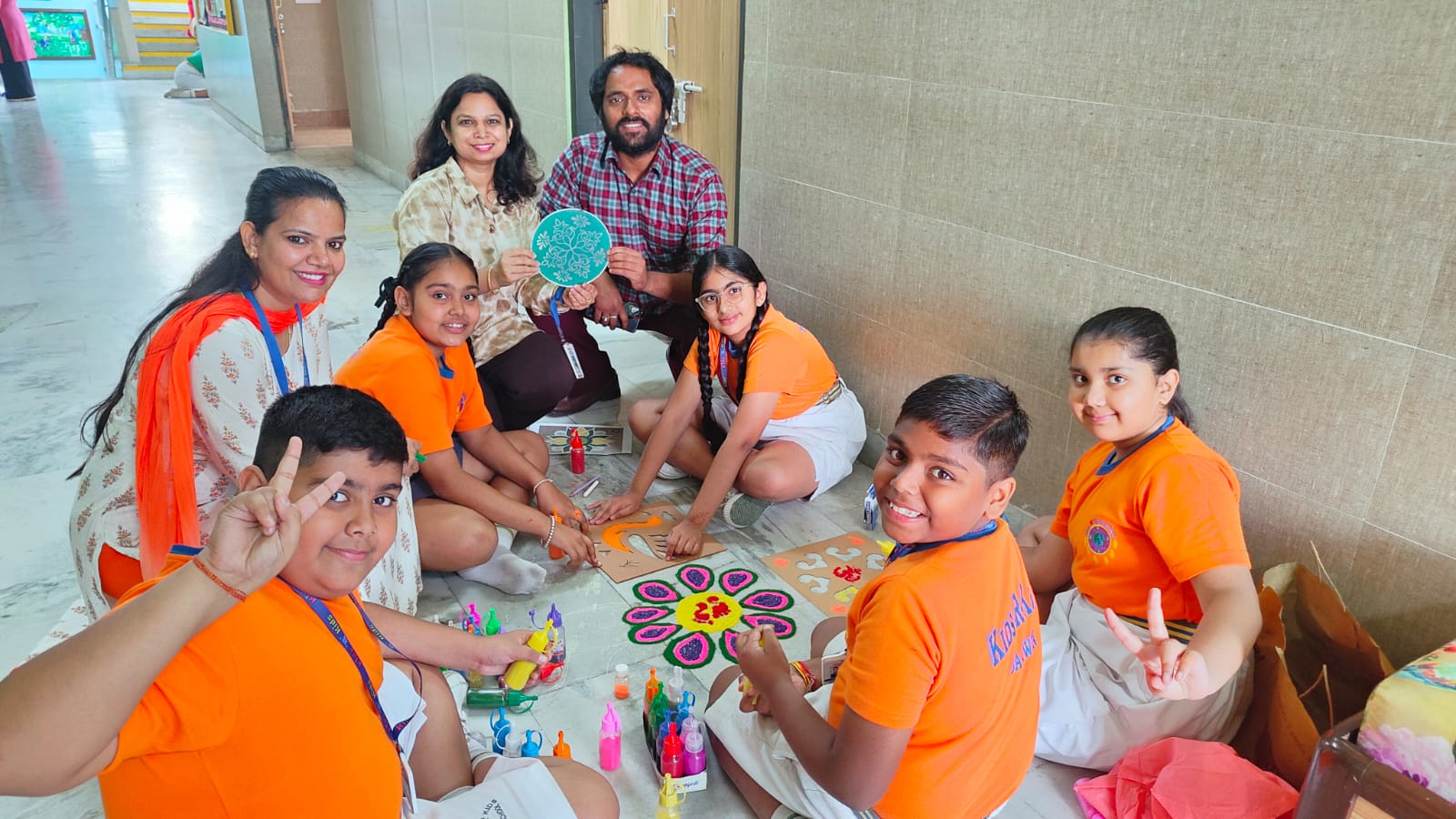
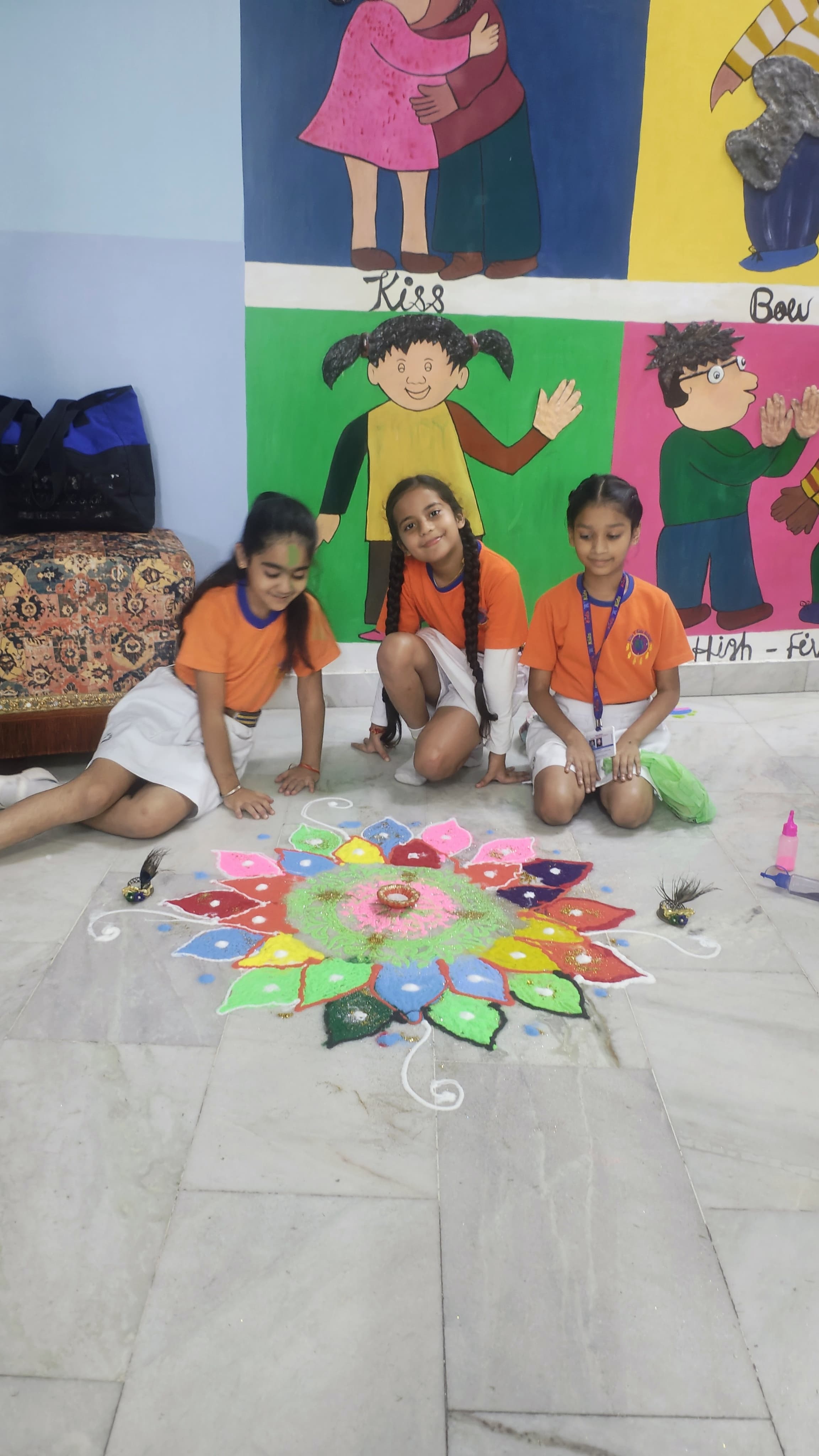
Rangoli is one of the most beautiful and meaningful traditional art forms of India. It is not just a decorative design made with colors; it is a symbol of culture, positivity, creativity, and togetherness. In our school, we organized a Rangoli Activity and Competition, where students participated with great enthusiasm. Through this activity, students not only created colorful designs but also learned the cultural and educational importance of rangoli.


What Is Rangoli?
Rangoli is a traditional Indian art form created on the floor using colors, flowers, rice flour, sand, or natural materials. It is usually made at the entrance of homes, temples, and public spaces during festivals and special occasions.
Rangoli is known by different names in different parts of India, but the idea remains the same—welcoming positivity, happiness, and good energy.
Where Did Rangoli Originate?
Rangoli has its roots in ancient Indian traditions. It has been practiced in India for hundreds of years.
Regional Names of Rangoli:
- Rangoli – North India
- Kolam – South India
- Alpana – West Bengal
- Mandana – Rajasthan
- Muggulu – Andhra Pradesh and Telangana
This shows how deeply rangoli is connected to Indian culture across regions.
Why Is Rangoli Important in Indian Culture?
Rangoli is important for many reasons, both cultural and symbolic.
1. Symbol of Positivity
Rangoli is believed to bring good luck, happiness, and peace. Making rangoli at the entrance of homes is seen as welcoming positive energy.
2. Cultural Identity
Rangoli represents Indian traditions and values. It connects the present generation with cultural roots.
3. Celebration of Festivals
Rangoli is an important part of festivals like Diwali, Pongal, Onam, Navratri, and other celebrations.
4. Expression of Creativity
Rangoli allows people to express their creativity freely through colors, patterns, and designs.
Why Rangoli Activity Is Important in School
When rangoli is introduced as a school activity, it becomes a powerful learning tool.
Educational Importance:
- Develops creativity and imagination
- Improves hand-eye coordination
- Teaches symmetry and balance
- Enhances color sense
Emotional and Social Learning:
- Encourages teamwork
- Builds patience and focus
- Boosts confidence
- Promotes respect for culture
Students learn by doing, which makes learning enjoyable and effective.


Rangoli Competition in Our School
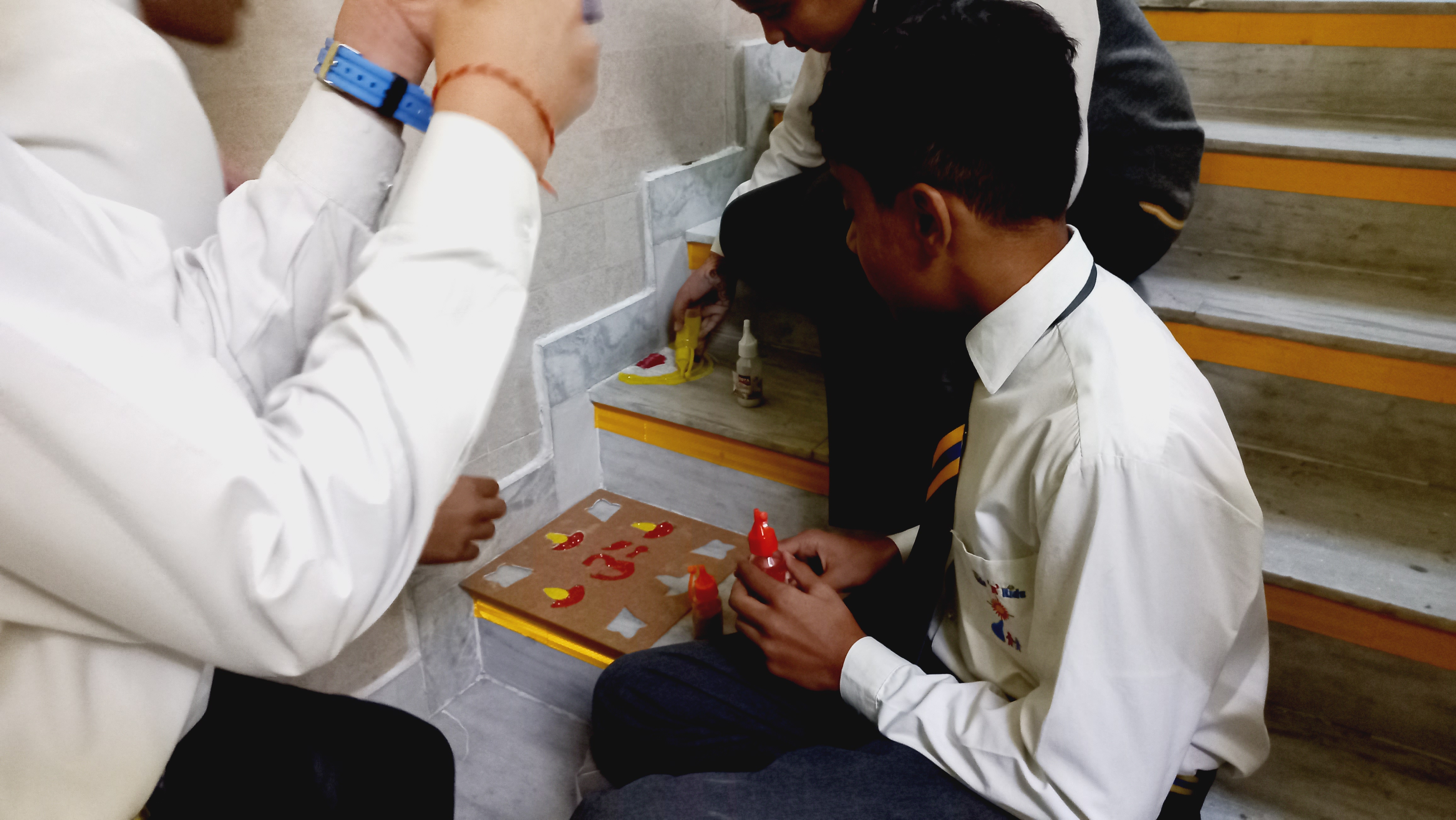
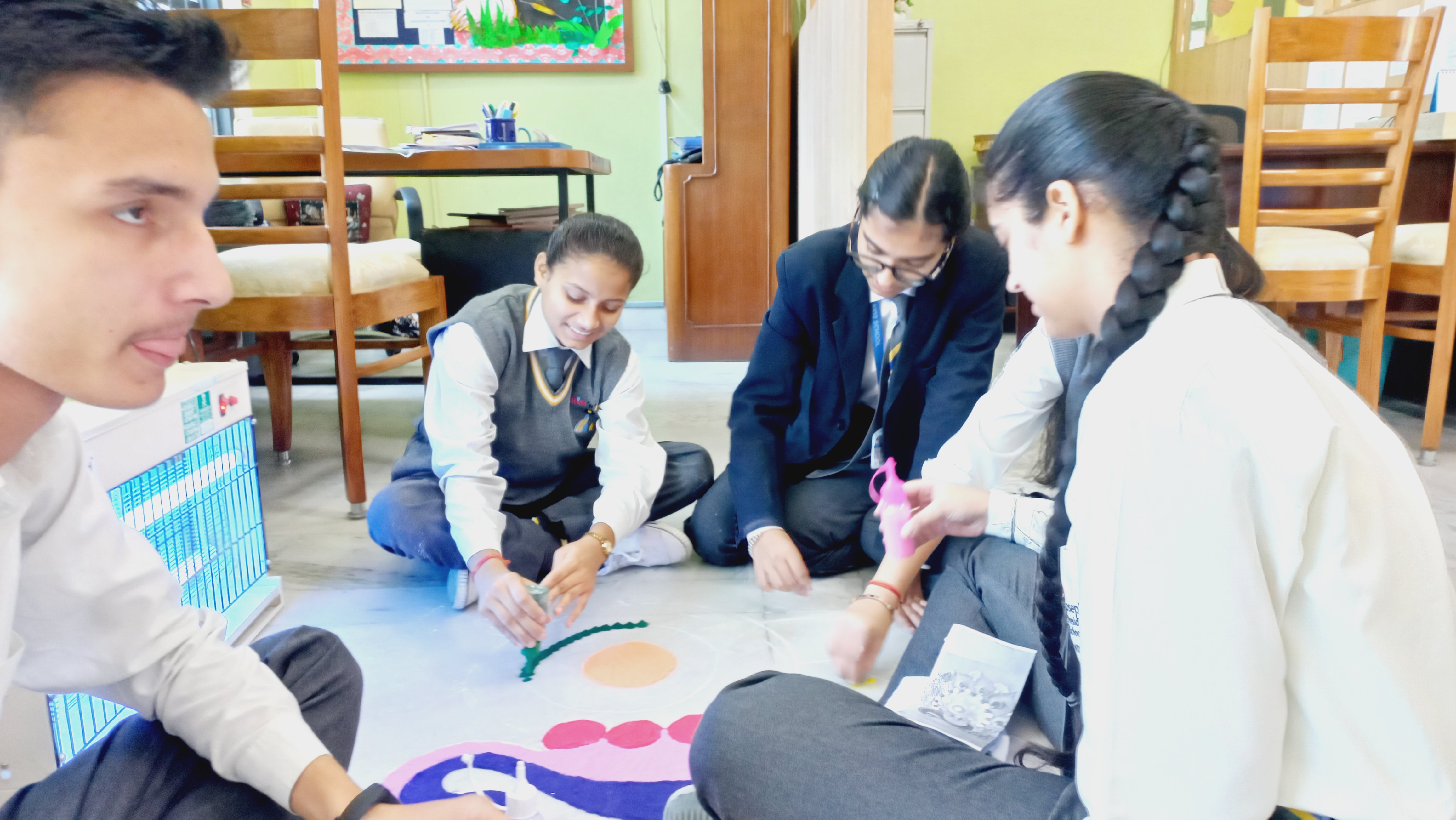
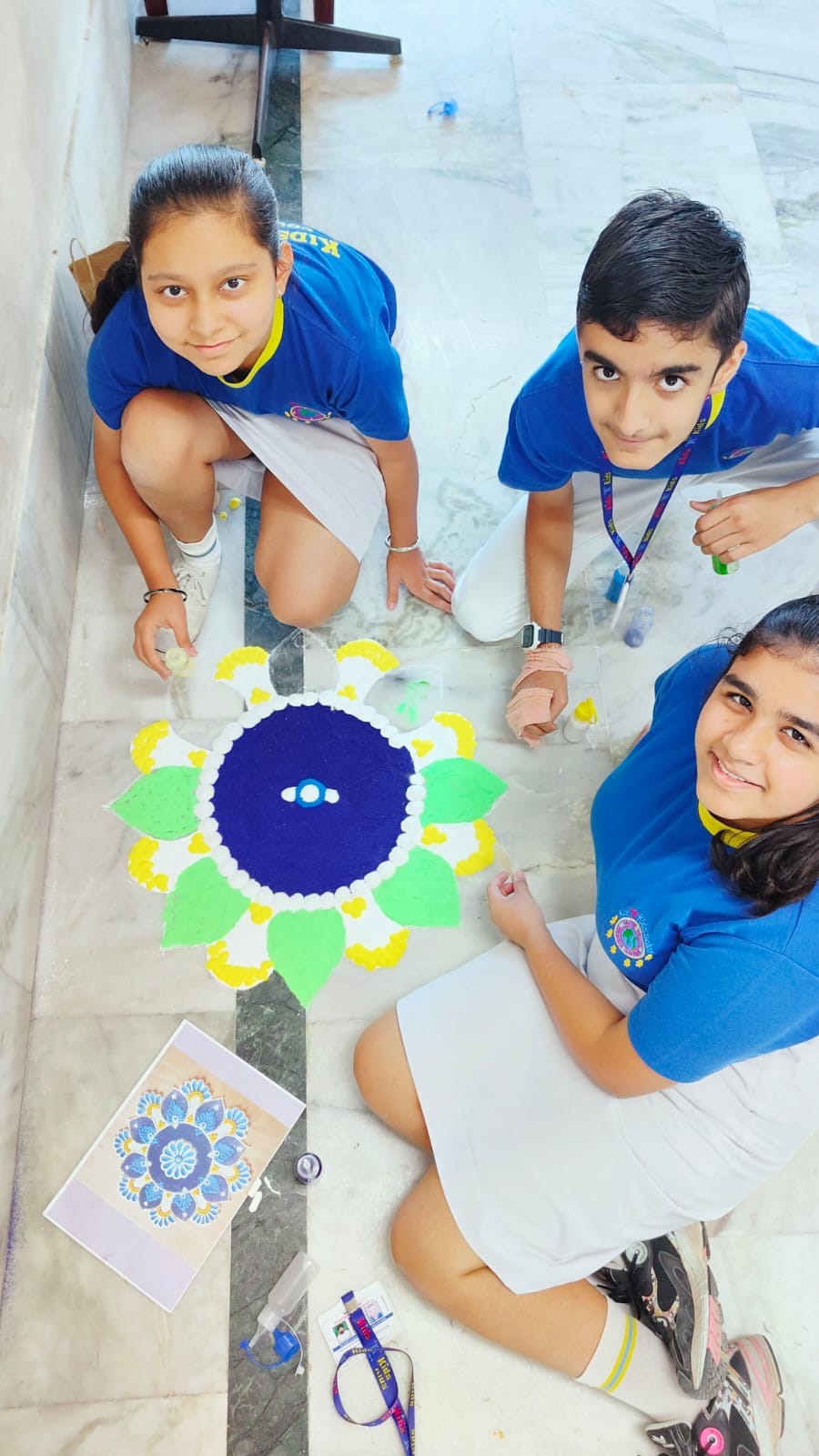
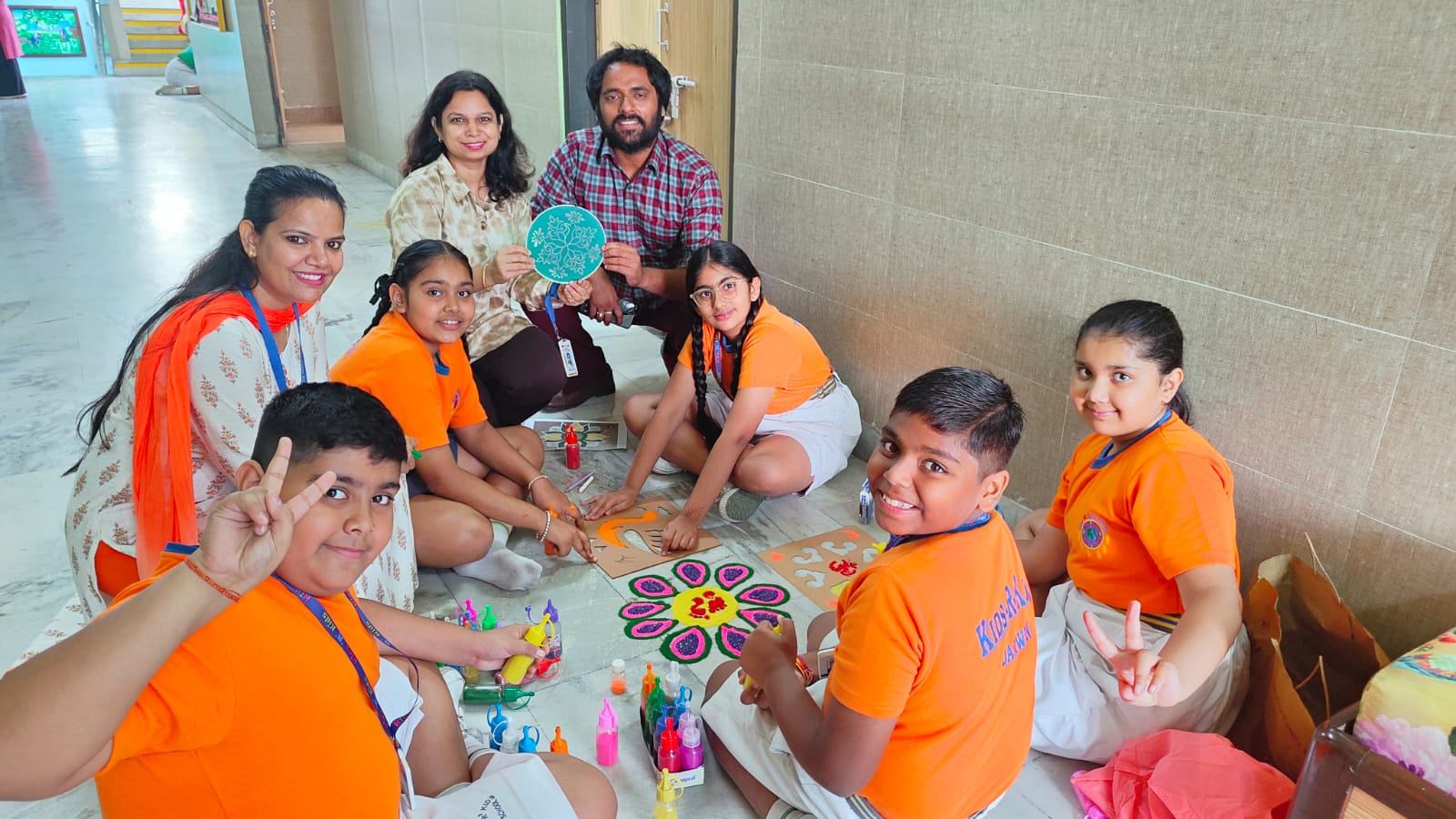
In our school, the rangoli competition was organized as a creative and cultural activity. Students participated with excitement and responsibility.
How the Activity Was Conducted:
- Students were divided into groups or participated individually
- Themes were explained clearly
- Safe and eco-friendly colors were used
- Students created rangoli designs within the school premises
The entire activity was done in a disciplined and joyful environment.
Themes Used for Rangoli Activity
To make the activity meaningful, students were encouraged to create rangoli based on themes such as:
- Indian festivals
- Nature and environment
- Cleanliness and awareness
- Unity and harmony
- Traditional motifs
These themes helped students think creatively while understanding social values.
Materials Used in Rangoli Activity
Students used simple and safe materials such as:
- Rangoli powder
- Natural colors
- Flower petals
- Rice flour
- Chalk outlines
They also learned the importance of eco-friendly rangoli, avoiding harmful chemicals.
Step-by-Step Learning Through Rangoli
Step 1: Planning the Design
Students first planned their designs mentally or on paper. This improved their thinking and planning skills.
Step 2: Drawing the Outline
Outlines were drawn lightly to maintain symmetry and balance.
Step 3: Filling Colors
Students carefully filled colors, learning control and neatness.
Step 4: Final Touches
Small details were added to enhance beauty and clarity.
Each step taught patience, accuracy, and creativity.
What Students Learned from Rangoli Activity
Artistic Skills:
- Color harmony
- Design balance
- Pattern creation
Life Skills:
- Teamwork
- Time management
- Respect for others’ ideas
Cultural Awareness:
- Importance of traditions
- Meaning behind cultural practices
Rangoli became more than an art—it became a learning experience.



Role of Teachers in Rangoli Activity
Teachers guided students by:
- Explaining cultural background
- Demonstrating basic techniques
- Encouraging originality
- Maintaining safety and discipline
Teachers motivated students to enjoy the process rather than focus only on winning.
Rangoli as a Tool for Value Education
Rangoli teaches important values such as:
- Cleanliness
- Positivity
- Unity
- Respect for tradition
Students understand that art can spread positive messages without words.
Long-Term Impact of Rangoli Activities
Activities like rangoli competitions help students:
- Stay connected to culture
- Develop creative confidence
- Participate actively in school events
- Carry traditions forward
These experiences remain with students for a lifetime.
Conclusion
The Rangoli Activity and Competition in school was a beautiful blend of art, culture, and learning. Through this activity, students understood why rangoli is important, where it comes from, and how it represents positivity and tradition. They learned creativity, teamwork, patience, and cultural values in a joyful way.
Rangoli is not just an art form—it is a reflection of Indian culture and a powerful educational tool. By introducing rangoli activities in school, we help students grow creatively while staying connected to their roots.
SEO-Friendly Keywords (Optional)
Rangoli activity in school, importance of rangoli, rangoli competition students, Indian traditional art rangoli, rangoli cultural significance






Rangoli Activity 2023